
In song, meditation, we praise you with the lifting of our hands. Your word says, clap your hands, all ye people. Your word says, make a joyful noise unto the Lord. Your word says, dance before the Lord and sing his glorious praise.
Thank you for the privilege of entering in to that which has been happening in the eternities as the angels sing, holy, holy, holy, holy, holy, holy, holy. May the words of our mouths truly be an expression of our heart and what we contemplate in our heart may it be acceptable in your sight. And for those who could not join us this morning for such a variety of reasons, many of whom are suffering with maladies, we care and that tells us that you care. How great is your love. Heal them, we pray, and bring them back to this family in this house. Now I pray, Father God, over the word of God that it will be a time of refreshing for each and every soul.
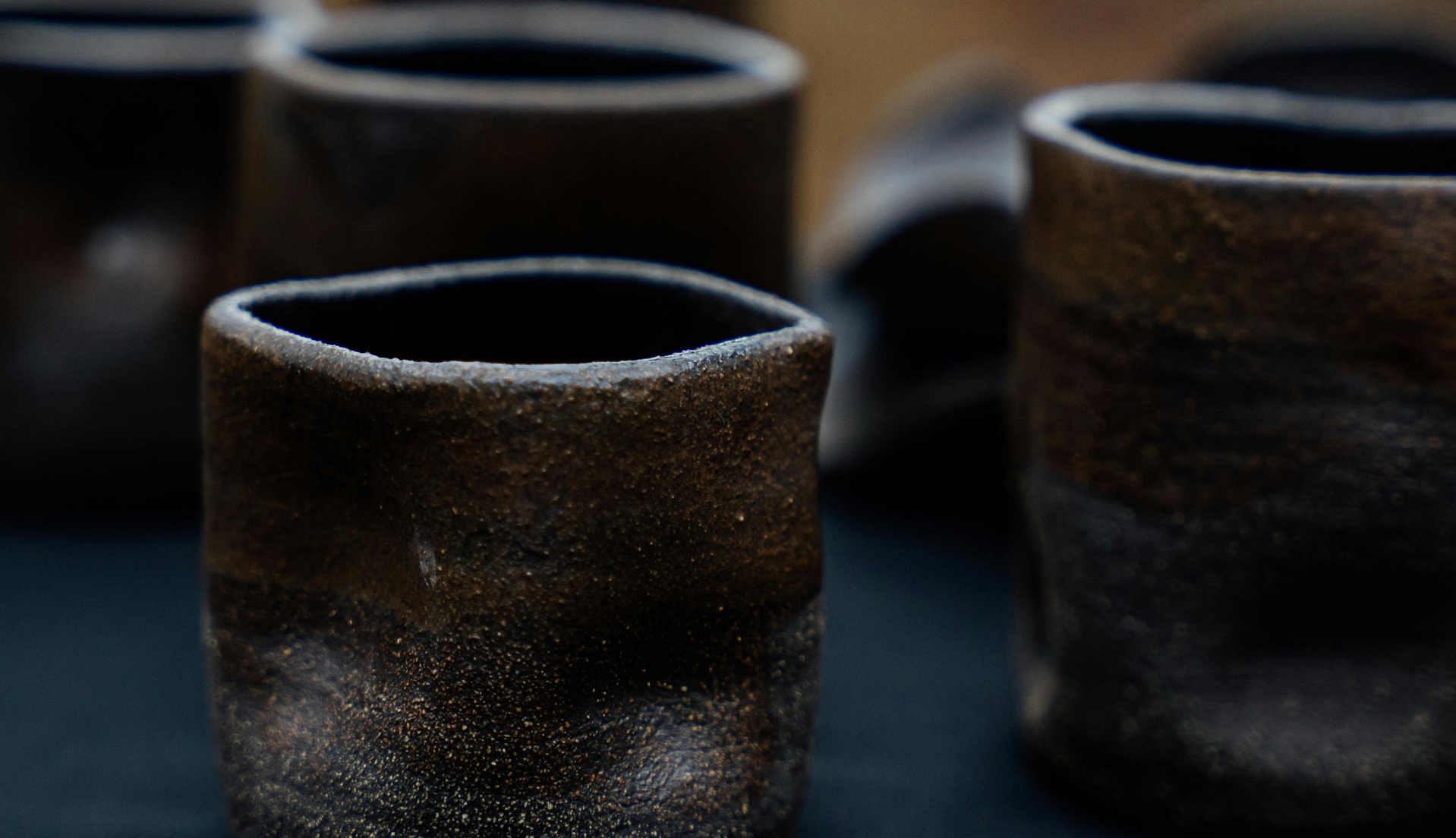
I pray, Lord God, that the people will hear more than what the preacher would say. That your Holy Spirit would open up glorious, glorious truths that are almost unspeakable and full of glory. We ask these mercies in Jesus’ lovely name and everyone would say, amen. Please be comfortable. This morning, I want to speak about the fourth cup, the fourth cup. I’ll explain somewhat about the first cup. I’ll explain a little bit about the second cup. I’ll explain a little bit about the third cup. It’s the third cup that we as a congregation meet at this table. That’s the third cup.
We’re talking about biblical, biblical instruction. That’s the third cup. There’s two cups come before that and my focus this morning is on the fourth cup. Exodus chapter six and verse six. Therefore, this is a message to Moses. Say this to the Israelite’s. I am the Lord and I will bring you out from under the yoke of the Egyptians. I will free you from being slaves to them and I will redeem you with an outstretched arm and with mighty acts of judgment. I will take you as my own people and I will be your God. Then you will know that I the Lord your God who brought you out from under the yoke of the Egyptians.
That’s Exodus six. Then in Exodus chapter 12. Exodus chapter 12 is a beautiful portrait of the Lord Jesus Christ as he makes his redemptive move. We know it as the cross. The price that he paid and how what he’s done on the cross has been imposed, injected, imparted, deposited in and through us. Changing us forever. So Exodus 12. The people who are known as the Israelite’s. Israel being the new name of Jacob. Every person who is a Jew is a descendant of Abraham, Isaac, and Jacob.
And Jacob as he wrestled with God received a new name known as Israel. The Israelite’s. That’s who the people are on the other side of the world right now. That the Muslims are saying we’re going to destroy every one of you. It won’t work. These are God’s people. I am your Lord. I am your God. And as I delivered you out of Egypt so I will take care for you. So Exodus 12 is a picture of Christ.
The Lord says to Moses and to Aaron, still in Egypt, this month shall be unto you the beginning of months. This is going to be the first of your year. This will be the beginning. This will be the first month of your new life. It shall be the first month of the year to you. Speak to the congregation and say in the 10th month of this, in the 10th day of this month, they shall take to every man a lamb. According to the house of their fathers, a lamb for a house. According to the according to the house of their fathers. You know we have 12 fathers. 12 tribes.
Right? So each tribe has to participate. Take a lamb for each house. If the house members are too few for the consumption of a whole lamb, let him and his neighbour next unto his house take it according to the number of their souls. Every man according to his eating shall make your count for the lamb. Your lamb shall be without blemish. Don’t pick the sickest lamb. Don’t pick the one that’s lame. You pick the very best lamb in your flock. He shall be a male of the first year.
You’ll take it from the sheep and you shall keep it, nourish it, provide for it, protect it until the 14th day of the same month. Are you noticing surely all the details? Every detail is essential. Because you see chapter 12 is a picture of Christ. So the Lord is laying out a template. You’ve got to do everything by the hour. Everything has to be exactly as I’m telling you. So that the picture of Christ is not soiled. The lamb has to be perfect. Regard the day.
Regard the month. Regard the hour. Your lamb shall be without blemish. Keep it till the 14th day of the month. And the whole assembly of the congregation of Israel shall kill it in the evening. And they will take the blood and they will strike it on the two side posts and on the upper door post of the houses. The same house that you’re going to eat in. And those who are within that house, I’m embellishing it so that it makes sense. And everyone that’s in that house shall eat the flesh that very night. And then how you’re to cook it is specific.
Roast with fire and eat it with unleavened bread. There’s a reason for unleavened bread. You’re going to be in a hurry. Ladies know how to prepare dough. And you add the yeast and then you wait and you wait and you wait. There’s no waiting. Unleavened bread. You haven’t got time for the bread to rise. You’re going to be in a hurry. Unleavened bread.
And with bitter herbs you’re going to eat this meal. Why would you want to eat something bitter? This is the night before you’re released. Tomorrow morning you’re on the go. Tomorrow morning you run for it. Tomorrow morning it’s over a million people are going to arise up and head out. Why bitter? Because it’s been a bitter 400 years. And every time that you participate in this Passover, which will happen every year for every generation, you will remember as you eat the bitter. It’s going to feel ugly in your mouth.
You’re not going to like it. And it’s going to remind you how your forefathers felt in Egypt. The bitterness of being enslaved. We’re God’s people, but we’re enslaved. We’re God’s people. We’re not allowed to worship him. We’re not even allowed to even mention his name. We’re supposed to be aligning ourselves with the religion of the Egyptian. This is bitterness in our mouth. So when you eat the lamb that night, participate eating the bitterness.
So the bitterness and then the joy of the lamb. The bitterness and the joy of the lamb. I tell you in the morning as the crowd was heading out, they could still taste the lamb. The bitterness was gone as they walked out. The taste of the lamb was still in their mouth. You have to eat all of it. Morse instructions. Don’t eat it raw. Don’t boil it. But roast it with fire.
The head with the legs and with the intestines. The intestines were to be removed and they were to be washed out and cleansed. And they would be put back into the carcass that’s being roasted and they would have eaten of the casings. You shall let nothing of it remain until the morning. Every morsel is important. This is a picture of Christ. Every part of his being is significant. Don’t leave one mouthful. Whatever is left in the morning, burn it with fire. And thus shall you eat it with your loins girded, your shoes on your feet, staff in hand.
You shall eat it in haste. This is the Lord’s Passover. Those are the words that like are a thunderclap. This is the Lord’s Passover. Interesting. I’m not Egyptian. I don’t know Hebrew. I don’t know Greek. But I have ways of finding things out. So many times, you know that I’ve travelled many, many, many, many countries and most of the time I was using interpreters.
So I would say a word and my interpreter would pause. If he paused for a moment, I’d throw in another word. In other words, the word I’m choosing, he doesn’t have a word to say it. In Kenya, when the British first went, they picked up some petrol for their machine, for their truck. They would say to the guy who put some fuel in their tank, can I have a receipt? There was no way to interpret that. They never had receipts. They didn’t have that kind of economy. So you couldn’t translate English receipt to Swahili. But that was solved the way they solved all their language problem.
The word receipt in Swahili is reciti, kind of like tomorrow-y, yes-y, maybe-y. They just add a couple of words, a couple letters on the end. It’s kind of cute being with them. When you try and translate from English Passover to the Egyptian language, forgive me, I forget what language that is, they have a word for it. Passover is in the Egyptian language and it’s speaking of spreading the wings as though to protect the young or protect something very, very important. Passover doesn’t mean just flying through, but it means to, remember Genesis 1, and the Spirit of the Lord hovered over the waters like an eagle would spread her wings and protect her young. The Lord said on that night, the blood applied to the doorpost will cause the Spirit of God to come and hover over your house. So when the Spirit of death passes through, that Spirit cannot touch you. This is the Lord’s Passover. When I see the blood, I will pass over you.
And for every generation until the year 2026, and as long as the Lord tarries, you shall celebrate the Lord’s Passover. As he passed over, what set the Israelite people free from the Egyptians? Was it the frogs or the lice? It was the Passover. It was the Passover. That was the great moment. This was an incredible atomic bomb that was hitting Egypt. The firstborn of all the cattle, the firstborn of all the goats, the firstborn of every creature, the firstborn of every son, the firstborn of every daughter in every Egyptian house died that night. The houses that were never touched by the death were the ones that were under his wings. Years ago, somebody used to sing a song under his wings.
I’m sure so many people sang that song, and it was a nice song, nice tune. So often I think we sing songs and we don’t know the theological depth to it. And if a song doesn’t have theological depth, I’ll have none of it anyway. It’s got to have depth. It’s got to have meat and potatoes. I don’t want chocolate chips all the time. I want meat and potatoes. The Passover, the Passover. It’s a feast. It’s a celebration.
Tomorrow we leave with the taste of the lamb in our mouths. I will pass through the land of Egypt this night, and I will smite all the firstborn in the land, both man and beast. And against all the gods of Egypt, I will execute judgment. I am the Lord. And the blood shall be to you for a token, a symbol. It’s a badge. It’s a seal. The blood will seal your house where you are. Don’t leave your house. It’s your bomb shelter.
And when I see the blood, I will pass over you. And the plague will not touch you. It will only smite the land of Egypt. This day shall be unto you for a memorial, and you’ll keep it as a feast to the Lord throughout your generations. You shall keep it as a feast by an ordinance forever. When you dig into this, it’s just so majestic and so beautiful. Everyone knew on a certain month, on a certain day, a certain process. The lamb had to be perfect. Hebrews 4 verse 15 says about our lamb, whose name is Jesus, he was tempted in every way just like we are, yet he did not sin. He was the lamb without blemish.
First John 3, 5, he was manifested to take away. He was revealed to take away our sins, and in him there was no sin. Then an extraordinary word, Exodus 12, 46. Kill this lamb. It must be eaten inside the house. Take none of the meat outside of the house, and do not break any of the bones. I actually had a fellow that in Vancouver wanted to work with me, so I hired him, and he was anxious. I want to preach. I want to preach. I want to preach.
I want to preach. I want to preach. I’ve had umpteen staff members. I want to preach. I want to preach. So I let him preach on a communion Sunday, and this is what he said. He was so brutalized by the Romans, they broke just about every bone in his body. I pretty near fainted. I thought, I want to preach. I want to preach.
Know the word of God. Not a bone shall be broken. Not a bone of that little lamb. Every house. How many houses were there? Half a million houses at least. Half a million lambs at the very least were killed that night. It was perfect before they touched it, and not a bone was broken. Not a bone. Numbers 9-12.
The Passover lamb must not be broken. Psalm 34 and 20. He protects all his bones. Not one of them is broken. The soldiers came and broke the legs of the men on the first cross. Then they came to the men on the second cross on the other side of Jesus. And then those who were responsible came to Jesus and saw he’d already given up his spirit. They did not break his legs. The breaking of the legs, part of the crucifixion. The Romans actually had a word for this breaking of the legs.
They didn’t have to say to the Roman, now go and break the leg. They actually had a word as part of the process, the procedure of crucifying. Part of the process was at a specific time a soldier was to go and with some kind of a club break the legs of the crucified person. Why? Because that person’s feet were pinned in some fashion, usually with nails, pinned to the post of the cross. And when that person is struggling to stay alive, they know they’re going to die, but there’s this thing about stay alive, stay alive. And they would push up on their feet and lift themselves up because when they’re hanging and they’re losing strength, they’re hanging from their arms now, you see. Their lungs are being constricted by the tugging in this fashion. So they were starving for breath. So to get their breath, they would push up with their feet.
The soldier would come along, break their legs, and now it was impossible to push themselves up, and the death came ever so swiftly. So the Roman soldiers were prepared to break the legs of all three men on those crosses. But when they came to the man on the middle cross, he’d already gone to be the completion of the sacrifice. Not a bone was broken. Hallelujah to Jesus. David, you said there’s going to be four cups. When are we going to get to the cup? It’s coming. A requirement at the Passover. Now the Passover happens every year, and the Jewish people actually have a book, and it’s to help you celebrate the Passover.
In there, there are the scriptures to read. In there is a layout of exactly how the Passover supper is to be served. And that process, that process, do this, then do this, and do that’s called the Seder. So you’ve all heard about the Seder meal. The Seder is not what you eat. The Seder is the process. It’s the template. This is what you will do first. This is what you’ll do second. This is what you’ll do third.
It’s important that every factor is covered. Four cups. Why four cups? Because the Lord made a promise in Exodus 6 and verse 6, four promises to do with the Passover. Number one, I will bring you out from the burdens of the Egyptians. Number two, I will rescue you from your bondage. Number three, I will redeem you with an outstretched arm and with great judgments. Number four, I will take you as my people, and I will be your God. Four cups celebrating four promises. So every year, the Jewish home, every home must celebrate the Passover.
If you don’t celebrate the Passover, you are a pathetic Jew, and you would be looked down upon. What? You didn’t? Do you know how come we’re here? We wouldn’t be here in Canada. We wouldn’t be living in Toronto. We wouldn’t be living in Montreal. Montreal is one of the biggest havens in the world for the Jewish people. There’s a lot of people watching to make sure that every one of our families, every person must participate. Every child sits at the table when the Seder process is taking place, and the children even have something that they’re supposed to do.
It’s tradition that in going through the Seder process, there’s the unleavened bread, and there’s a particular moment when the bread is consumed. The bread is stored, at least a portion of it, in a linen cloth, and it’s got three partitions in it, because there’s going to be three processes of bread. The middle one is like a pocket, and there’s matzoh. The bread is called matzoh, and it’s inserted in the pocket. The bread is hidden in the pocket, and then someone apparently takes the bread out of that pocket and goes to another part of the house and hides it. This is all part of the Seder, and the children are to say, where is the bread hidden? It’s a game. They’re supposed to go and look for it, but of course, as the daddy is hiding the bread, he’s making sure that they see it. The bread. Take, eat.
This is my body, broken for you. And within hours, his body was placed silently in a hiding place. But three days later, when they came to look after the bread, the body, the angel said, why are you looking for him here? He’s risen, he’s risen. So every part of the Seder process is speaking of what Jesus has done for us. So this is the concept today, in English terminology, this is the concept that is portrayed in the book, the Seder book. The first cup. This is the cup of sanctification. As long as the Israelite people were within Egypt, they were living in the midst of filth. You mean it was a dirty place?
No, it was theologically unclean. They were living in a place where they were supposed to bow, curtsy, make offerings, or whatever to the gods. They were not sanctified. Sanctified means to be set aside. Sanctified means to be specifically put in a special place of holiness, reserved to honor God. So when they were coming out, it was the Lord sanctifying them, saying, you are my people. There’s millions of people you’re living among, the Egyptian, but you’re mine. And as I bring you out through the Passover, I am sanctifying you. He told, Moses told Pharaoh. When Pharaoh said, why do you want to go out?
He said, we want to leave the camp here for a bit. We’ve got, you know, we’ll just be outside of Egypt. Why? Because God wants us to worship him, and we know that we can’t worship him while we’re here. You don’t want us worshiping God, so let us go out. Because the Lord God says, I desire my people to worship me, because the Lord God wanted them to be sanctified, not drawn. Think about it. When they got out there and Moses up on Mount Sinai, what did they do? They made a golden calf. You see, they had become unsanctified.
Every time they started to wander away from God, they were starting to wander back into that which they had been delivered from. It’s like a dog returning to its vomit. That’s scriptural. The Lord said, I want you sanctified. And so cup number one says, we were sanctified when God brought us out. It’s acknowledging that God saw to it. The first cup. So as Jesus is sitting with the disciples that night, we have our own little regimen, because we’ve picked it up out of Corinthians, we’ve picked it up out of the Gospels, and that’s this Passover. When Jesus met with them that night, it was the Passover. And he said, I have longed for this night.
I have longed for this. Now there’s a Passover every year. And with the disciples, Jesus had to have been to at least two Passovers with them. And Jesus, from the age of 12, was probably at every Passover feast in Jerusalem. His family would take him from the town where they lived in Nazareth up to the city of Jerusalem, because this was one of the highest point in the Jewish calendar. Go to the Passover feast in Jerusalem and celebrate. The Lord delivered us through the, it’s called the Passover feast. But Jesus said of this night, I’ve longed for this night, because I want to be the Lamb of God who takes away the sins of the world. I want to do this for you. So the drinking of the first cup is the celebration of our sanctification.
The second cup, when the Lord said, I’ll rescue you from the bondage, from the slavery, when we give our lives to Christ, we are set free from the bondage of sin. And somebody says, well, I gave my heart to Jesus. I’m still struggling. It’s a sanctifying process where the Lord draws you out of the bondage of slavery. He breaks every chain. We sing this song over and over also. Jesus breaks every fat hair. It’s a song I love to sing. It’s got theology. It’s got weight.
It’s got value. He breaks every feather. When I sing that song, it’s a celebration of the morning in Hagersville, Ontario. I gave my life to Jesus, and the devil no longer had a claim on me. But it’s been a process, and I’m still going through the process. When I gave my life to Christ, I became justified. Justified never failed God. But sanctification moves on. It’s the forward movement where the Lord, by the Holy Spirit and by the Word, shakes off the stuff and gets rid of it. I’ll never be perfect.
Ask April. She’ll tell you. So the second cup is celebrating us being rescued from the bondage of slavery. God’s people were slaves. What kind of God are you serving? The most powerful, the only God, the powerful God. And how come he’s leaving you here? How come in 400 years? Where’s God? Where’s God?
Well, he showed up, and he set us free from our bondage. Cup number three. I will redeem you with an outstretched arm and with great judgments. The third cup is the one that we celebrate. This is the cup of redemption, and it’s drunk at the end of the meal. Remember partway through the meal he took bread, and he broke it, and then they went on to eat. And then the scripture says, and when they had finished eating, he took the cup. He’d already taken three cups. He’d already taken two cups, but at the end of the meal he picks up the third cup. The third cup is the cup of redemption.
It’s drank after the meal, and I found so much information on this, and I won’t, I won’t tarry on it. The third cup is significant, and it’s the one that we celebrate at this table. It’s the covenant of the, the new covenant in his blood. The blood that was on the doorpost, I will pass over you. This cup is about the pass over. The blood was applied to the doorpost. Your person has a doorway. You allow through that doorway whatever you choose. Then once the enemy gets inside, your house is a temple of the Holy Spirit, and in this temple there are many rooms. I remember preaching a sermon years ago, and I was inspired by something some other preacher had said about how we let the Lord go into our living room, and that’s where we live out our daily life.
What do we do in our living room? Well, we draw the drapes, and we do whatever we want to do. This is my house, but the Lord Jesus must be allowed to go into the living room and make sure your life is good, and clean, and pure before him. Or you have a library. The Lord wants to go into your library and find out what you’re reading, and what you’re watching in your library on the television. The Lord has to be allowed to go into your kitchen and see what kind of beverages that you enjoy in your house. Don’t go there, David. You’ll upset somebody. Too bad, Bunky. And then Jesus is with you in your house, and he says, I smell something I don’t like.
What could that be, Lord? Well, we need to find out. There’s something doesn’t belong here. You and I are living in this house together. Into my heart. Into my heart, Lord Jesus. Come in today. Come in to stay. We sang that as children, didn’t we? He comes in, and he smells something.
I’ve given you free access to every room. It’s not just the rooms. It’s the closets. Jesus appears before this door and says, there’s something in the closet I don’t like. You lock the door. He says, I need to go in there. He persuades you to open the door, and when he looks in, he says, this is disgusting. And you say, I’ll take care of that, Lord. And he says, you can’t even take care of it without becoming disgustingly filthy. I’ll do it for you.
I’m going to make my life better. I’m going to turn over a new leaf. New Year’s Day, I’m going to, I’m going to do it. I can do that. You can’t do it. If it took the blood of Jesus on the cross to pass forward and give you the liberty, the freedom to go forward, do you really think that what God began in the spirit at Calvary, you can finish in your flesh? You gotta let Jesus clean out that closet. But we protect the closet. That’s mine. I gave him everything.
How much does he want? He wants all. It has been said, he’s either Lord of all, or he’s not Lord at all. Those are hurtful. We don’t want to hear that. I don’t want to give up the bitterness and the anger I have toward that person. And forgive us our trespasses as we forgive those who trespass against us. But Jesus goes on. We love the end of that little prayer, don’t we? Forgive us, Lord.
Don’t lead us into troublesome paths. Keep us in the straight and every, but Lord, there is a little problem I have with Sister McGillicuddy. Jesus said, if you don’t forgive her, then your redemption is not perfect. If you don’t forgive that one, how do you expect me to forgive you? But Lord, you don’t understand their sin, their repudiation. The things they said about me, they’re just unforgivable. And Jesus would say, look at the prints of the nails in my hand. How grievous was your sin toward me? The prophet said, the whole head is sick. We’re sick from the crown of our head to the soles of our feet.
We’re as ungodly as we could possibly be. We’re like pus. The Lord says, I’ve got to clean you up. Only I can do it. And how does he do so? With the blood of Jesus, the cleansing stream. I see, I see. I plunge and oh, it cleanses me. The songwriter went on, it cleanses me. It cleanses me.
Oh yes, it cleanses me. Matthew 26 verse 27. Watch. Then he took the fourth cup and he gave thanks. Drink from it, all of you, for this is my blood of the new promise. Remember the four promises? The last cup is the renewal of the fourth promise. And the renewal is so incredible, it’s called by Jesus. This is the new cup. The fourth cup is a new cup.
Why is it new? Because a little lamb was slain and his blood was on the doorpost. That was the first cup. And the second cup. Then the third cup, all produced and supplied by the blood of an innocent animal. But in him who there was no sin, he’s the lamb of God. The Baptist said, behold the lamb, the whole lamb, the lamb. You have celebrated the lamb every year at the Passover. You speak joyously of the lamb. And you know, on the day of Passover in Israel, they slew lambs on that day.
They had a special place in Bethlehem just to keep the Passover lambs. Did you know that? People would come and donate a lamb. It was a special place. Take care of these lambs. Make sure they’re fed. Make sure they’re watered. Don’t let the wolves in. Don’t let them fall. This was a special place kept for all the lambs.
So Israel knew about the slaying of the lambs. And when the day of Passover came in Israel, every year the blood flowed, lamb upon lamb upon lamb. But this is a new cup because it’s about not another lamb, another lamb. This is the lamb, the lamb who takes away the sins of the world. And Jesus said, this represents my blood. And it must be applied to the doorpost of your sanctuary, of your person, of your house. Every room, every closet. And the door is the finished product so that when death comes near your way, when Satan comes to try and test you and tempt you, the first thing he has to do is get past the blood on the doorpost of your house. And let me tell you something, the devil is allergic to the blood of Christ. Hallelujah to God.
I used to hear testimonies at the end of the testimony, and pray for me. The devil’s after me. I thought, I’m not praying for you. You’ve got the blood of the Lord Jesus Christ. But I think I’m in, I think I’m carrying around a demon. Not possible because the blood on the doorpost of your soul says to the devil, this guy has been bought by the blood. Get lost, devil. Hallelujah. I’m good till four o’clock, get excited. This is my blood, which is shed for every house, shed for many for the remission of sins.
Look out, but I say to you. Okay, he said, drink. He got that. Go ahead, drink. This is my, this represents my blood. But I say to you, I will not drink. Four cups. He drank the three with them. When it came to the fourth, he said, you drink it now, but not me. Lord, why are you not drinking this cup?
Because yet I have to go and fulfill the privilege of the first three. I will not drink of the fourth until the hope has been realized. The fourth cup is called the cup of hope, the cup of hope. And Jesus is saying by not drinking that cup, the hope is not complete. Watch this. It’s not complete. Even Jesus said, when I arrive in heaven, the cup that I will drink, I refuse to drink this cup. He said, until you and I drink it together in the father’s kingdom. We get to drink the third one. We don’t get to drink the fourth one because Jesus says the fourth one is reserved for us.
I dare not drink it yet. I salivate. I salivate thinking about drinking the fourth cup, Nicholas. The fourth cup. You’ve been with us for about a year and most every month you’ve drank of the third cup. But there’s one more. Nicholas, don’t miss the second coming of Jesus, the resurrection. Art, don’t miss. Don’t miss the resurrection. Don’t miss the coming of the Lord because soon and very soon we are going to see the king.
Soon and very soon we are going to see the king. Soon and very soon we are going to see the king. Hallelujah. Hallelujah. We’re going to see the king. And one of the first things we’ll do when we get there, Judith, is we’ll all drink of the hope because we’re satisfied. We took our kids to Florida how many years ago? We promised them so many sleeps till we get there. So many sleeps. Are we there yet, mama?
Drove us nuts. Are we there? How much longer? How much longer? I pray that there’s a hunger, desire in your heart. You say, oh Lord Jesus, how long, how long till we hear the great song? Hallelujah. Hallelujah. Hallelujah. Amen.
How long, Lord Jesus? We wait and we wait. How long? How many sleeps? Jesus says, I want the taste of the cup like you do, but I cannot come until the Father says, I’m pleased with the house that you built for your friends, Jesus. The house is complete. Go get your bride. And we drink at the married supper of the Lamb, the fourth cup. Heavenly Father, I thank you for your goodness, your mercy. I thank you, Lord.
This book is so, this book is so delicious. It’s so wonderful. I thank you for every divine truth and every truth is threaded through a gazillion other truths. To read this book is just life itself. I thank you for the treasures that are buried in every word, in every verse. I pray for, Lord God, those who are on the internet and they’re watching just now. They’re not here.
They’re not with us, but oh God, I pray that they’ll sense the presence of the Lord in their house, whether it’s on the East Coast or the West Coast or somewhere in between.
I pray, oh God, that they’ll sense that Jesus, the Lord God himself, is kneeling down where they are and he’s embracing them and he’s loving them and he’s saying, soon, I’m coming soon, I’m coming soon.
Thank you, Lord God, for the privilege of just being identified with you.
Amen and Amen.